.png)
Flexofc Journal
How to Choose the Right Coworking Space for Your Business
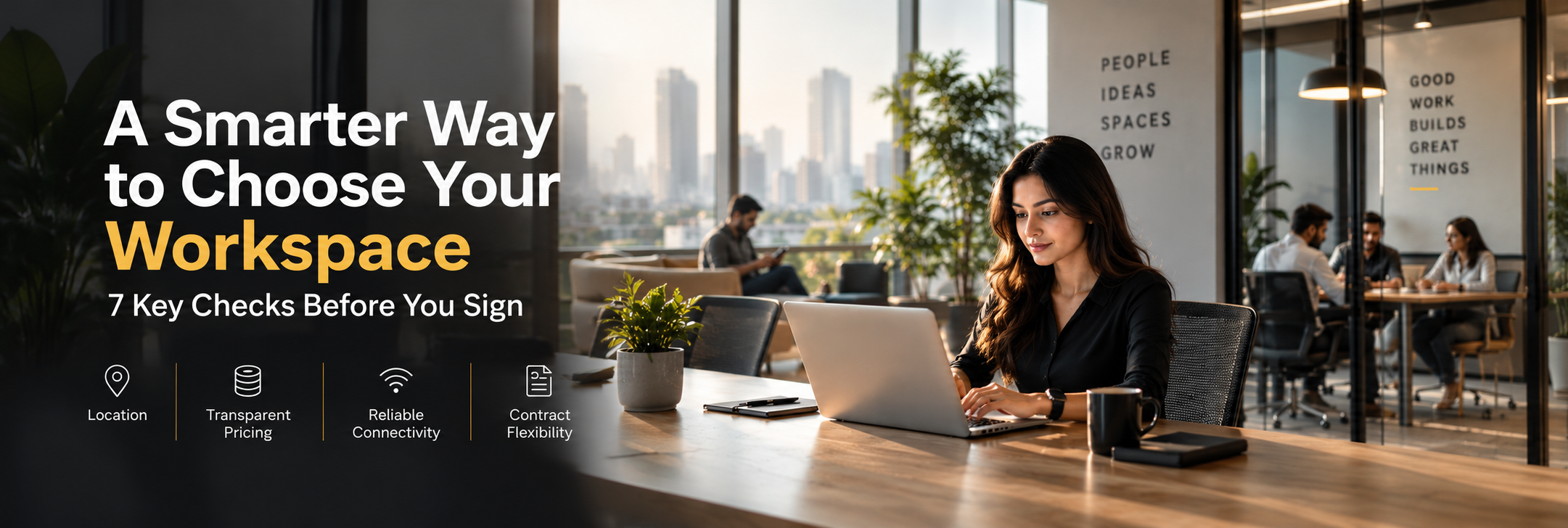
Picking the right coworking space comes down to getting four fundamentals right first: location, reliable connectivity, transparent pricing and contract flexibility. Everything else is secondary.
A striking reception area makes a great first impression during a tour, but it won't compensate for a 45-minute daily commute bottleneck. A stylish glass cabin means very little if client calls echo down the corridor, and free specialty coffee won't save a critical sales pitch when the Wi-Fi drops mid-presentation.
A coworking space isn't just a collection of desks—it’s your team's daily operating environment.
This is why the cheapest option rarely turns out to be the most economical. Paying a slightly higher monthly rate often makes strategic sense if it eliminates surprise bills, saves hours in transit and offers enterprise-grade infrastructure.
Before signing a membership agreement, run any potential space through these seven checks.
1. Start With the Location, Not the Interiors
Location impacts your team's performance and energy every single day.
When evaluating potential sites, look beyond the neighborhood name and assess the micro-market. A workspace situated 500 meters from a major Metro station is far more practical than a slightly cheaper option tucked inside a congested, hard-to-reach industrial pocket.
Key Location Factors to Verify:
Transit Accessibility: Proximity to Metro lines, bus routes and key highways.
Commute Realities: Average door-to-door transit time for your core team during peak rush hours.
First & Last-Mile Connectivity: Availability of ride-hailing services, cabs and local transport.
Client Experience: How convenient and safe the location feels for visiting prospects or partners.
Surrounding Ecosystem: Nearby restaurants, banks, coffee shops and secure parking options.
Pro Tip: Do a trial commute during peak morning hours (around 8:30 AM) and test the return journey at 6:00 PM before committing. A simple drive-by reveals operational flaws that no sales brochure will ever mention.
2. Demand a Line-Item Cost Breakdown
The advertised price per desk rarely reflects your total monthly expenditure. Two operators might quote identical seat rates, yet deliver vastly different final invoices.
To avoid hidden surprises, request a written commercial proposal detailing the following:
Expense Category | What You Need to Clarify |
Base Desk Fee | Billing cycle terms (monthly vs. quarterly upfront) |
Tax Impact | Whether quoted figures are inclusive or exclusive of GST |
Meeting Rooms | Monthly free credit allocation vs. overage hourly rates |
Internet & IT | Standard access fees, static IP charges or setup costs |
Printing & Utilities | Monthly page allocations and after-hours HVAC/electricity fees |
Parking & Access | Reserved vs. unreserved parking rates and 24/7 access costs |
Deposit & Lock-in | Security deposit refund terms, exit notice periods and lock-in duration |
Meeting room allotments are a frequent source of friction. Many operators promise "complimentary meeting room access," which often translates to a small monthly credit quota. Once exceeded, hourly rates add up quickly.
Always ask one direct question before signing: "Assuming standard daily operations, what will our exact final invoice look like every month?"
3. Stress-Test the IT Infrastructure
For modern businesses, internet access isn't an amenity—it's core utility infrastructure. Never rely on verbal promises of "high-speed Wi-Fi."
A professional workspace handling daily cloud applications, heavy file uploads or continuous video conferencing requires robust technical backup:
Dual ISP (Internet Service Provider) redundancy with automatic failover
Uninterrupted Power Supply (UPS) and heavy-duty generator backup
Business-grade routers and network segregation options
Dedicated private bandwidth or static IPs (where required)
Sound-insulated phone booths for confidential calls
Inquire directly about their ISP failover process: When the primary network drops, how long does backup connectivity take to kick in?
Run an independent speed test from the actual desks your team will occupy. While testing, pay close attention to acoustic insulation. Glass-walled cabins often look sleek but leak sound easily. If your team discusses proprietary code, financial data or sensitive client info, soundproofing matters just as much as bandwidth.
4. Assess the Daily Work Culture
Coworking spaces sell an environment, but not every culture aligns with how your team operates.
Some facilities thrive on high energy, hosting frequent networking mixers, community events and collaborative gatherings. Others maintain a quiet, corporate atmosphere tailored for deep focus.
Neither environment is inherently superior—it depends entirely on your operational needs. A creative agency or sales unit might thrive in a vibrant, bustling hub, whereas a software engineering team spending eight hours in complex development will likely prefer minimal distractions.
Visit the space on a standard Tuesday afternoon. Observe noise levels around your prospective desk cluster, evaluate common area density and determine whether the ambient energy helps or hinders your team's daily output.
5. Build in Headcount Scalability
Your workspace contract should comfortably survive your next hiring phase. If you start with 8 seats today and plan to hit 15 within six months, ensure the space can absorb your expansion seamlessly.
Flexibility Checklist:
What is the notice period and minimum lock-in commitment?
How easily can additional adjacent seats or cabins be added?
Can you transfer your agreement to another facility within the operator's network?
What happens if business conditions force you to downsize?
Startups and high-growth companies should prioritize contractual agility over locking in a marginally lower long-term rate. A contract that makes scaling up easy but downsizing nearly impossible becomes a serious liability if market conditions change.
6. Match Physical Security to Your Risk Profile
Digital security gets plenty of attention, but physical security is equally vital when handling proprietary client information, trade secrets or physical hardware.
Evaluate access control standards before moving in:
Keycard or biometric access for private cabins and server rooms
Visitor logging protocols at reception
24/7 CCTV coverage across corridors and entry points
Dedicated, lockable storage units and secure network ports
An enterprise division working on compliance-heavy data will require dedicated network setups and strict access controls. Conversely, a small consultancy may only need lockable drawers and secure phone booths. Align your security requirements directly with your company's actual risk profile—don't overpay for unnecessary protocols, but never compromise on essential data privacy.
7. Audit Everyday Amenities
Glossy marketing materials often highlight game rooms, rooftop lounges and artisan coffee bars, but your team's day-to-day satisfaction depends on basic ergonomic functionality.
Focus your inspection on operational basics:
Ergonomics: Are the office chairs fully adjustable and built for 8-hour workdays? Is task lighting adequate?
Facilities: Are washrooms cleaned continuously throughout peak hours? Is the pantry well-stocked and hygienic?
HVAC Performance: Is the air conditioning balanced evenly across the floor, or are certain cabins freezing while others remain warm?
Visitor Mechanics: Is the main reception desk well-staffed to welcome your guests professionally?
Budget Shared Space vs. Premium Enterprise Flex Hub
Choosing between budget operators and premium flex spaces depends on your brand requirements, privacy standards and budget limits.
Parameter | Budget Shared Space | Premium Enterprise Hub |
Pricing | Lower entry-level cost | Higher all-inclusive monthly rate |
Infrastructure | Standard shared Wi-Fi & basic power backup | Dual-ISP failover, static IPs and enterprise IT |
Layout & Privacy | Open hot-desking & shared cabins | Private soundproof suites and custom floors |
Meeting Access | Pay-as-you-go / minimal credits | Generous monthly credits and priority booking |
Scalability | Best for individual desks & small teams | Ideal for mid-sized teams expanding rapidly |
Branding Control | None / shared signage | Custom entryway branding and internal fit-outs |
Target Audience | Freelancers, bootstrapped startups and solo pros | Scale-ups, corporate satellite hubs and established firms |
The Quick 10-Minute Pre-Sign Checklist
Before transferring a deposit, clear this final checklist:
[ ] Transit: Is the peak-hour commute reasonable for the majority of the team?
[ ] Total Cost: Have you received a written, line-item quote including GST, IT and meeting credits?
[ ] Connectivity: Have you run a speed test from your actual desk assignment?
[ ] Acoustics: Are private calls and confidential discussions contained properly?
[ ] Contract Terms: Are notice periods, lock-ins and expansion clauses clearly defined?
[ ] Comfort: Are seats, lighting and HVAC settings comfortable for long work hours?
Note: If an operator hesitates or remains vague when answering simple contractual questions, treat that as a major red flag.
How FlexOFC Simplifies Workspace Discovery
Shortlisting office space traditionally means dealing with multiple cold calls, unverified photos and ambiguous pricing structures.
FlexOFC eliminates this friction by helping businesses discover, compare and secure verified coworking spaces, managed offices and flexible workspace options across 50+ Indian cities—completely brokerage-free.
Instead of contacting dozens of independent operators, you can filter spaces based on your specific operational requirements: location, headcount, workspace layout and monthly budget. The result is total cost transparency and zero guesswork, helping your team secure the right operational environment faster.
FAQs
How do I choose the best coworking space for a early-stage startup?
Prioritize contract flexibility, reliable connectivity and location convenience over premium add-ons. Avoid committing to excess capacity too early; instead, choose an operator that lets you add seats seamlessly as hiring demands grow.
What are the most common hidden costs in coworking agreements?
Common unexpected expenses include GST overages, meeting room bookings beyond basic credit caps, dedicated IT/static IP setup charges, parking passes and extra fees for after-hours HVAC usage.
Is a cheaper coworking desk rate always worth it?
Rarely. A lower upfront price tag often comes at the expense of poor soundproofing, single-provider internet setups, remote locations or overcrowded facilities. Always measure the total operational cost rather than looking at base seat rates alone.
Final Takeaway
The ideal coworking space isn’t the one with the flashiest marketing materials—it's the one where your team works productively on an ordinary Tuesday.
When your commute is simple, your connection is stable, your calls remain private and your monthly invoice holds no surprises, you've found the right operational home for your business.
Need Help With This Topic?
Talk to the Flexofc team
If this article sparked a question about coworking, coliving, managed offices, or the right workspace setup, contact us and we'll help you narrow the best next step.
Contact UsRecommended for you
Oct 9, 2026
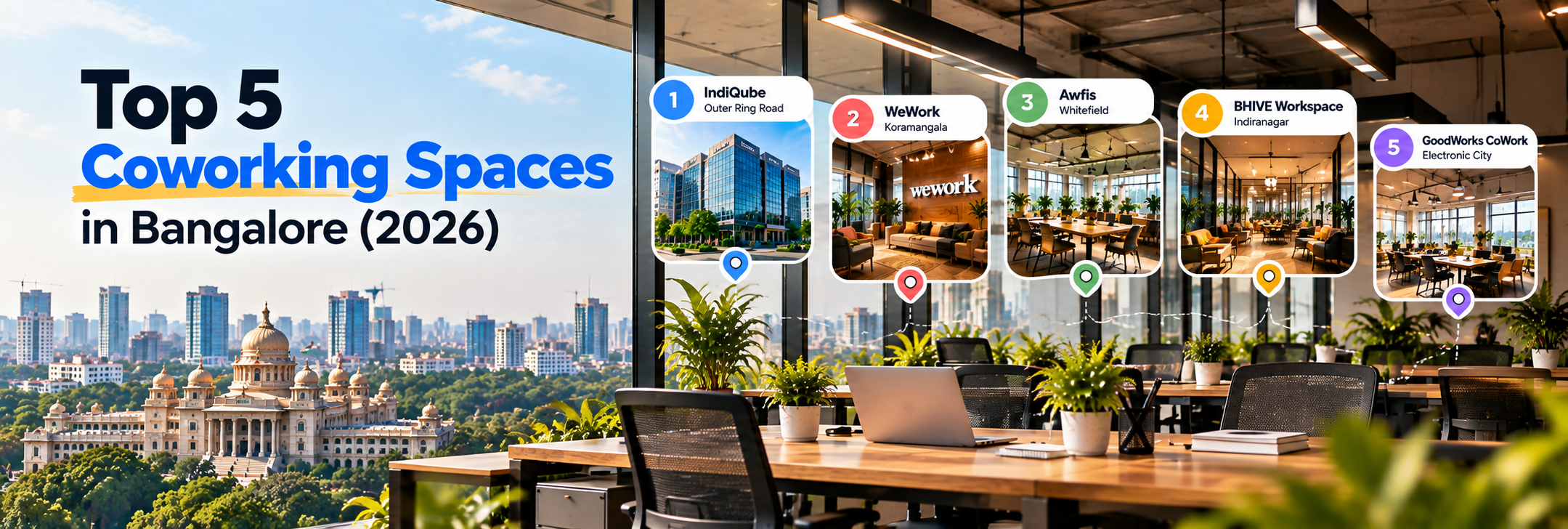
Top 5 Coworking Spaces in Bangalore: 2026 Guide
Looking for the best coworking spaces in Bangalore? Explore the top 5 options, compare locations, am...

Oct 8, 2026
Top 10 Coworking Spaces in Delhi (2026): Areas & Best Picks
Delhi-NCR's flex office market hit a record in 2026, with operators taking 45% of Q2 leasing. This g...

Oct 7, 2026
Top 10 Coworking Spaces in Gurgaon (2026): Prices, Locations & Amenities Compared
Compare 10 leading coworking spaces in Gurgaon by indicative desk pricing, micro-location, metro acc...